
If you’ve spotted a crack in your plaster, the good news is that most of them are not serious. A thin, hairline crack is usually just the wall settling or the plaster finishing its drying process, and it can be filled in an afternoon. Wider cracks, ones that keep coming back, or cracks running diagonally from a door or window are a different matter; they’re often telling you something is moving behind the wall, and that’s when you’re better off looking at a proper re-skim rather than reaching for the filler again. Here’s how to tell which one you’re dealing with, based on how we handle plastering in Eastbourne day-to-day.
What Actually Causes Cracks in Plaster?
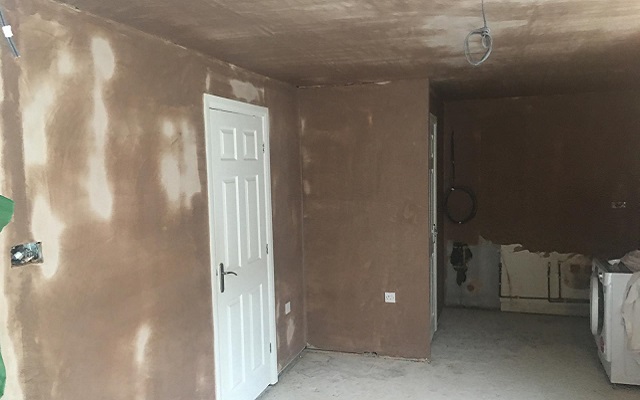
Cracking gets a bad reputation, but a lot of it is completely normal. A few things tend to be behind it:
- The plaster is drying out. As fresh plaster loses moisture, it contracts a little. That’s usually what causes the fine, spider-web pattern you sometimes see on a wall a week or two after it’s been done.
- The building itself is moving. Older homes and timber-framed properties, of which there are plenty around Eastbourne and East Sussex, shift slightly with the seasons, expanding in warm weather and pulling back in the cold.
- The wall wasn’t prepped properly beforehand. Plaster applied over a dusty, unstable, or poorly keyed surface rarely holds as well.
- Settlement. This is the one worth paying attention to. It tends to show up as a wider crack, often on a diagonal, and it likes to appear near door frames, windows, or where an extension joins onto the original house.
Because we handle plastering alongside the rest of a project rather than as a job dropped in on its own, it’s usually fairly obvious which of these is going on once we’ve had a proper look at the wall, not just the crack itself. A quick look at how the crack sits, how deep it runs, and what’s nearby (a window frame, a radiator, a joint with an extension) tells us most of what we need to know before we even talk about fixing it. You can see the full picture of how that works on our plastering services page.
When Should I Actually Worry About a Crack?
Fair question, and the honest answer is that not every crack deserves your attention.
You’re probably fine if the crack is
- Fine and hairline, especially if it showed up not long after new plastering went in
- Staying the same size, you checked it a few weeks ago, and it hasn’t grown
- Confined to a small patch rather than spreading across the wall
It’s worth getting looked at if
- It’s wider than a couple of millimeters.
- It runs at an angle from the corner of a door or window
- You’ve filled it before, and it’s already back
- It’s crossing from a wall onto the ceiling, not just staying on one surface
If you’ve filled the same crack more than once and it keeps opening up again, that’s usually your answer right there: whatever’s causing it hasn’t actually been dealt with.
Repair or Re-Skim? How to Choose
Neither option is “better” on its own; it really comes down to what you’re looking at.
A repair means opening the crack out a touch, filling it properly, and blending it in with the surrounding wall. It’s quick, low-mess, and it’s the right call for a single crack that’s isolated on its own.
A re-skim means putting a fresh, thin coat of plaster across the whole wall or ceiling. That’s the better route when cracking has spread across the surface, when a wall’s been patched one too many times already and it’s starting to show, or when you’re bringing a room up to scratch as part of a bigger renovation.
|
Situation |
Repair | Full Re-Skim |
|
One crack, on its own, small |
Yes | Not needed |
|
Cracks scattered across the wall |
Won’t last |
Yes |
|
Wall’s already been patched a few times |
Short-term at best |
Yes |
|
Part of a bigger extension or refurbishment |
Depends on the finish you want |
Usually yes |
| Wall is still moving structurally | Won’t hold |
Sort the movement first |
Not sure which camp your walls fall into? That’s exactly the kind of thing we work through with people before quoting on a job, details on our plastering services page.
It’s also worth thinking about timing. A single crack you noticed last week doesn’t need urgent action, you can watch it for a few weeks and see whether it stays put. Cracking that’s spread since you first noticed it, on the other hand, is a stronger reason to get a re-skim booked in sooner rather than later, since patching the same spot over and over tends to cost more time in the long run than sorting the wall properly in one go.
Can I Just Fill a Hairline Crack Myself?
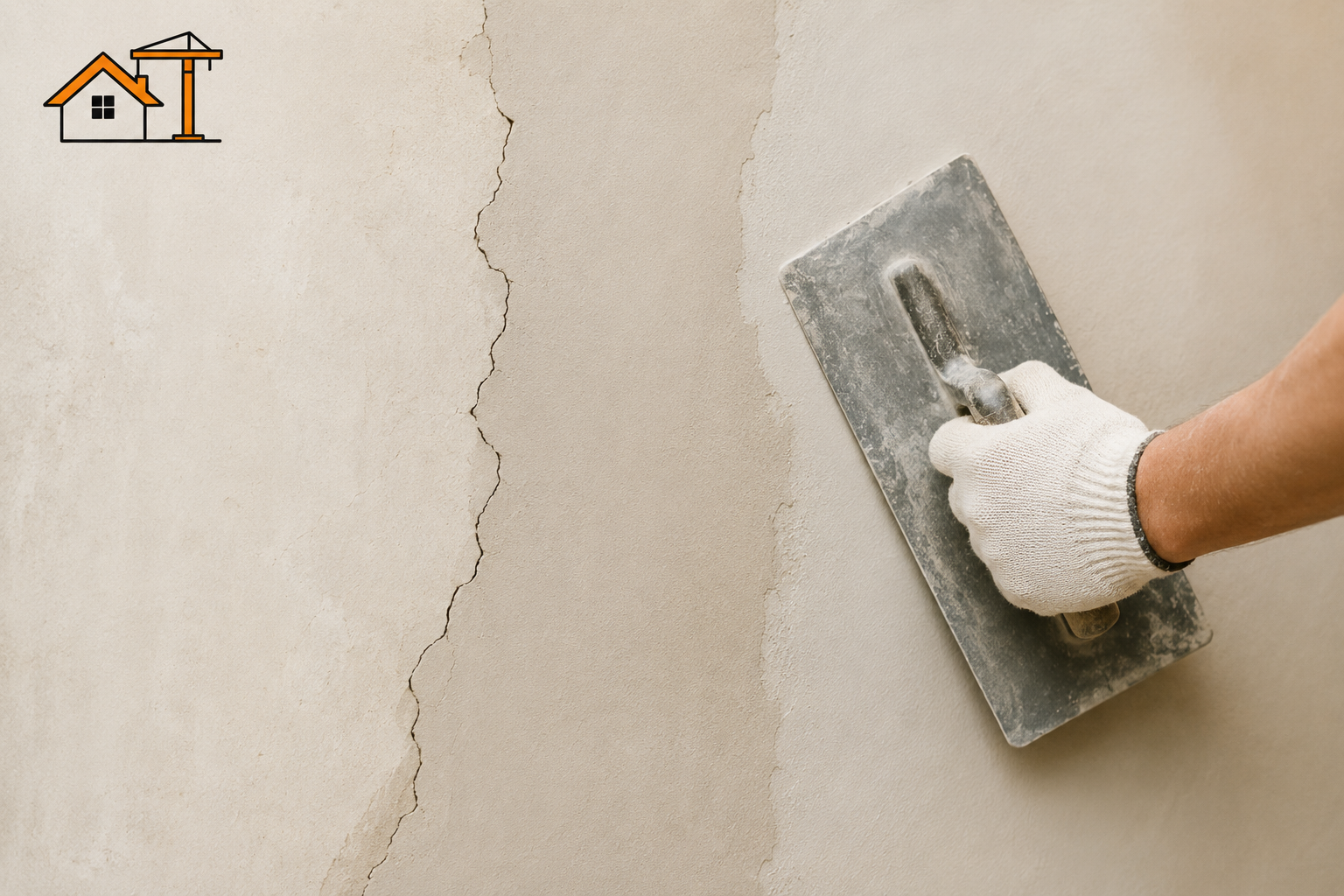
In most cases, yes. If it’s a single crack caused by normal drying or minor movement, filling it, sanding it back, and painting over it once dry is a fine, lasting fix.
The one question to ask yourself first: is it on its own, or is it one of several? A lone crack is nearly always safe to fill. A wall covered in a network of them, though, is usually a sign of something wider going on, often how the plaster dried or how the wall was prepped, and filling each crack individually just papers over that.
What If Plaster Cracks While It’s Still Drying?
It happens more often than people expect, particularly in the first few days after fresh plaster’s gone up.
- Leave it alone for now. Filling it before it’s fully dry can trap moisture underneath and cause more problems than it solves.
- Look at the ventilation in the room. Plaster that dries too fast is far more prone to cracking, so steady, moderate airflow beats blasting a heater at it.
- Once it’s dry, take another look. If it’s a small, isolated crack, treat it like any other and fill it.
- If the whole wall’s cracked, not just one patch, that points to something about how the plaster went on or dried, rather than a fault with the wall itself, and it’s worth getting checked.
Why Does My Plaster Keep Drying Too Fast?
Plaster that dries too quickly is more likely to crack, because the outer layer hardens before what’s underneath has had a chance to catch up. Usually it comes down to one of these:
- A radiator, heater, or direct sun hitting the wall while it’s still curing
- The room’s ventilation swinging between extremes: nothing at all, then a sudden draft
- A wall surface that’s very absorbent or dusty, pulling moisture out faster than it should
This is one of the reasons we manage drying conditions as part of the job rather than leaving it to chance; it’s covered under our wider construction services, not treated as an afterthought once the plasterer’s packed up and gone.
Stopping Cracks Before They Start
A bit of planning goes further than any patch job. Worth keeping in mind:
- Get the wall properly prepped before plaster goes anywhere near it
- Let it dry naturally rather than trying to speed things up with heat
- Use plasterers who understand how the rest of the building fits together, especially in older Eastbourne properties or where a new extension meets the old structure
- Sort out any structural movement before replastering over it
- On bigger jobs, plan plastering into the build sequence properly, rather than squeezing it in once everyone else has finished
- Give a freshly plastered room a reasonable amount of time to settle before decorating, instead of rushing paint or wallpaper onto a wall that hasn’t fully dried out
Why We Don’t Treat Plastering as a Standalone Job

At JP Projects UK Ltd, plastering has never sat on its own. It’s woven into every refurbishment, extension, and full build we take on across Eastbourne and the surrounding areas.
Here’s why that matters: plastering goes on near the end of a job, but it depends entirely on what happened before it. If the carpentry, electrics, plumbing, or roofing isn’t finished and dried out properly first, plastering is the trade that ends up showing every one of those mistakes. Bringing in a separate contractor who only sees their one slice of the project misses that connection, which is part of why we keep it under one team.
We’ve seen this play out on older properties too, where deciding between refurbishing and rebuilding really comes down to what’s happening structurally, not just what the wall looks like on the surface. It’s also why sorting out something like a leaking roof properly, before any replastering starts, matters so much; damp getting into a wall is one of the more common reasons plaster keeps cracking or blowing after it’s just been redone.
You’ll find examples of finished plastering and refurbishment work in our gallery, and you can read what past clients thought of the process in our testimonials. And if you’re trying to work out whether a contractor is the right fit before committing to a plastering or refurbishment job, our piece on finding a reliable builder in Eastbourne is worth a read.
Key Takeaways
- Hairline cracks caused by normal drying or minor movement are usually fine to fill yourself.
- Wide, diagonal, or repeat-offender cracks are worth having looked at before you touch them again.
- Go for a re-skim when cracking’s spread across a wall, when it’s already been patched a few times, or as part of a bigger refurbishment.
- Fast drying, from heat or poor airflow, is one of the biggest causes of cracking; controlling it matters as much as the plastering itself.
- Plastering, held under one construction team rather than handled as its own isolated trade, tends to hold up far better down the line.
Frequently Asked Questions
- When should I worry about plaster cracks?
When the crack is wider than a couple of millimetres, runs on a diagonal from a door or window, has come back after being filled before, or has spread from the wall onto the ceiling. A stable hairline crack usually isn’t cause for concern. - Can plaster cracks be fixed?
Yes. A single, isolated crack can usually be filled and finished without much fuss. If cracking’s widespread or tied to structural movement, a re-skim or dealing with the underlying cause first is the better route. - How do I avoid plastering cracks?
Prep the wall properly before plastering, let it dry gradually rather than forcing it, use plasterers who understand the wider building, and deal with any structural movement before re-plastering over it. - Can you just fill hairline cracks in plaster?
Yes, as long as it’s a single crack rather than part of a wider pattern. Fill it, sand it smooth, and paint over it once fully dry. If you’re seeing several hairline cracks across the same wall, a re-skim is usually the better long-term fix. - What should I do if plaster cracks while it’s drying?
Leave it until it’s fully dry before touching it. Check that the room isn’t swinging between no airflow and sudden heat. Once dry, if it’s one isolated crack, fill it as normal; if the whole wall’s affected, get it looked at.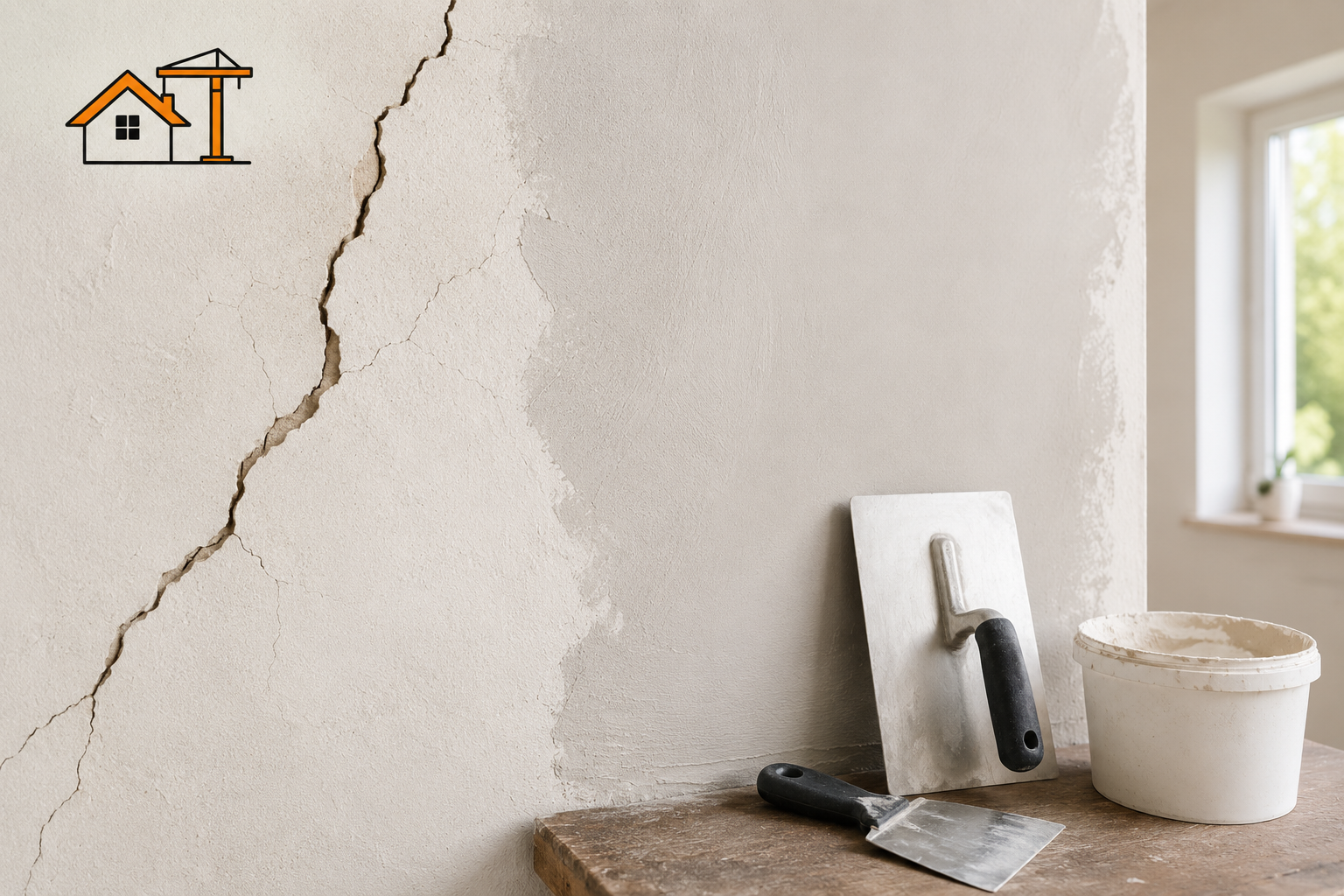
About the Author
James Pettitt is the founder of JP Projects UK Ltd, a construction company based in Eastbourne covering full builds, renovations, refurbishments, extensions, carpentry, plastering, and roofing across Eastbourne and East Sussex. Get in touch through the contact page, or have a look through more building guides on the JP Projects UK Ltd blog.
You can also find project updates on Pinterest, Flickr, Tumblr, and Substack.